How Open Information Changed the Real Estate Business Forever.
Why access to data stopped being an advantage, and what we must do now.
Click HERE to watch:
How Open Information Changed the Real Estate Business Forever
The real estate industry changed drastically the day information became open source.
And chances are you’ve been paying the price ever since.
This is a story about how open information changed the real estate business, why access to data is no longer a competitive advantage, and what real estate professionals must do now to stay relevant.
When Information Was Power
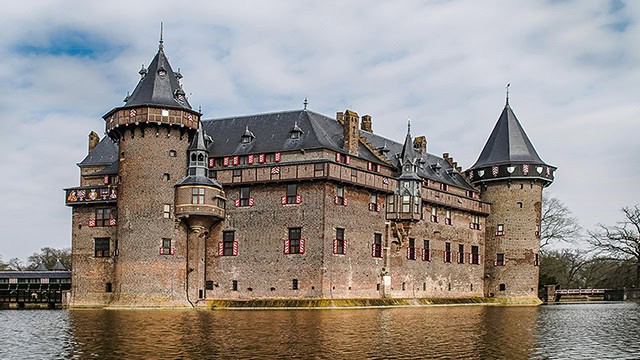
Remember what the great feudal lords used to do to protect their castles? They built moats around them.
These barriers were created for one purpose. To keep invaders out.
Later on, critical locations were protected by other types of barriers. Walls, fences, barbed wire, and so on. All designed to keep attackers out.
But something very interesting happened. You can call it the law of unintended consequences.
Not only did these barriers of wood, earth, metal, and water keep intruders out, but they also kept the residents in.
All of a sudden, the metal bars that originally looked like they were protecting the residents began to resemble the bars of a cage. Or a prison meant to keep the inmates inside.
The MLS as a Moat
Information works the same way.
It used to be that whoever controlled information controlled the transaction.
Licenses, user fees, subscriptions, registrations. These were the keys to the castle. They made sure only certain people had access to the kingdom.
For a long time, systems like the MLS were real competitive advantages.
But over time, those same controls became locks that no longer kept outsiders out. Instead, they kept insiders in.
What once differentiated professionals slowly became an outdated reason to keep doing things the old-fashioned way.
When Information Became Free
Today, information has been democratized.
Siri, Alexa, Cortana, Google, DuckDuckGo, and all their industrial brothers and sisters know everything.
When was the last time you heard a good bar bet?
It used to be that knowing who scored the winning goal in the 1967 World Cup, or who played bass on the B side of David Bowie’s second album, could win you a beer.
Now we all carry a magical device made of silicon and glass that can answer almost any question instantly.
What Zillow and Redfin Changed
It’s the same in real estate.
You may disagree with the information available on Zillow, Redfin, or other aggregator sites.
But you can no longer pretend your clients, and more importantly your potential clients, are not using them.
They are learning. Comparing. Deciding. Often before they ever speak to you.
Information is no longer scarce. Access is no longer exclusive.
Why Information No Longer Creates Advantage
So what’s the solution?
Ironically, the best way to overcome the new pressures imposed by state-of-the-art technological solutions, often called hard skills, is to deepen your understanding and use of time-proven soft skills.
That shift, from controlling information to earning trust, is what I studied and wrote about in All About Them.
The Shift to Soft Skills
I looked at great companies such as Nike, Discovery Channel, Toyota, and many others.
They stopped focusing on what they did and started focusing on who they did it for.
They built trust. Relationships. Clarity.
Those companies understood something early. When information becomes free, connection becomes valuable.
What Real Estate Professionals Must Do Now
The same thinking applies to real estate.
The tools, habits, and mindset that once protected the business now hold it back.
What moves things forward is not walls or fences. It is understanding people.
Those same ideas can help you build the kind of business, and the kind of life, you want.
Without anything keeping you in. Or holding you back.
Why Information Isn’t the Advantage It Used to Be
Here’s the punchline. The questions I asked at the beginning of this post are no longer answerable because they’re trick questions. There was no World Cup in 1967, so there can’t be a winning goal from it. And asking who played bass on the B side of a specific Bowie release makes no sense because the credits, versions, and sides of the album don’t line up cleanly the way your memory might suggest.
The old bar bet worked because information was scarce, difficult to access quickly, and fuzzy. But today, information is abundant and precise. And so, knowing facts no longer creates an advantage. Knowing how to think, connect, and explain does.
When people asked what I did – for many years I would reply “information arbitrage”
As you mentiuoned, today its easy to find the answeres you need on the web.
Today, I focus on people that like and respect me.
Information and “being qualified” are now just the base line – people do business with people they like and respect.
Good post, Bruce. Looks like you may be targeting a real estate meeting or client.
Thank you, Stoney.
Actually, Real Estate events are among the most frequent types of conferences I speak at already.
At each one I attend, I’m mobbed by brokers and realtors trying to figure out what changed and what they need to do to stay competitive.
The point of this article was to acknowledge their concerns and offer them a new way of thinking. But it’s also a cautionary tale for professionals in other industries who are, or will be, suffering the same fate.
I often think it’s more valuable to present an interesting scenario for people that allows them to extrapolate their own meaning without hitting them over the head with it.
Only time will tell if I’m right or wrong.