Bruce Turkel's Insights on Branding and Messaging Strategies

800 Years Later, St. Francis of Assisi Still Shows Us How to Live
Mary Shelley created a story that absorbed the anxieties of her age and still reflects ours. From the articulate Creature in the 1818 novel to Boris Karloff’s familiar movie monster, Frankenstein shows how experience and repetition can reshape what we think we know—and why we should understand AI before deciding what kind of monster it is.

What Frankenstein Can Teach Us About AI
Mary Shelley created a story that absorbed the anxieties of her age and still reflects ours. From the articulate Creature in the 1818 novel to Boris Karloff’s familiar movie monster, Frankenstein shows how experience and repetition can reshape what we think we know—and why we should understand AI before deciding what kind of monster it is.

How to Generate More Sales: Five Words That Changed My Business
There is no single sales channel that works every time. But five simple words consistently create opportunities: “Are you open to chat?” The invitation replaces the pitch with curiosity and makes room to discover needs, referrals, and value neither person could see in advance.

What if the Scarcity Mindset Isn’t the Problem?
We are told to replace a scarcity mindset with abundance thinking. But scarcity is not always the villain. When something is both limited and genuinely desired, its limits can increase its value and help us decide what deserves our time, attention, and care.

Your Brand Cannot Afford Your Personal Drama
Public opinion moves faster than facts, nuance, and legal systems. When a founder’s personality becomes inseparable from the company, personal drama can quickly damage trust, customer loyalty, and brand value. Strong brands create meaning that survives any one leader’s controversy.

Good Good, Callaway, and How Much Brand Value You Can Destroy in 60 Seconds
Good Good and Callaway spent years building audience, trust, and partnerships. Then a 60-second ad triggered canceled programming, lost sponsorships, internal departures, and a larger question every organization should ask: who has the judgment and authority to say no?

What Are You Actually Selling?
You know what you sell. But do you know what your customers are actually buying? A Tiffany wedding band shows how understanding that difference can help you add value.
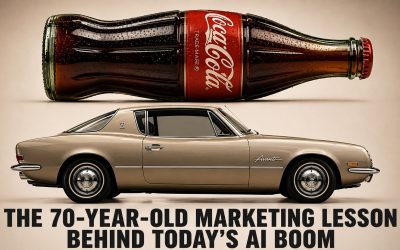
The 70-Year-Old Marketing Lesson Behind AI
The world’s leading AI companies all made the same surprising decision: they packaged revolutionary technology inside familiar experiences. Raymond Loewy explained why that works more than seventy years ago.

The Lettuce Crisis: When You’re Explaining, You’re Losing
Restaurants are losing customers because of what people believe. Discover what the lettuce crisis teaches every business about customer behavior, confidence, and decisive leadership.

If Three People Tell You You’re Drunk, Go Lie Down
We naturally assume we see the world as it really is. Social psychologists call this naive realism. But in leadership, sales, customer service, and marketing, other people’s perceptions often matter more than our intentions.

Who Are You When No One’s Looking?
Your personal brand is not what you claim in a bio or presentation. It is the reputation people form through every email, meeting, promise, and ordinary interaction—especially when nobody is keeping score.

The AI Movie Alvar Took Hundreds of Years to Create
The AI short film Alvar demonstrates how quickly filmmaking is changing. Its greatest strength comes from storytelling techniques that have captivated audiences for centuries—and every business can learn from them.

Brand Trust: The Only Thing That Ever Builds a Brand
Customers don’t buy because of logos or taglines. They buy because they believe. Here’s why brand trust is the true foundation of every successful brand.

You Shouldn’t Race What You Can’t Replace.
A crash at a racetrack taught me a lesson about risk that still shapes how I make decisions today. Here’s why you should never race what you can’t replace.

People Don’t Share Ads. They Share Stories.
Most companies spend their time creating better advertisements. But people rarely share ads. They share stories. Here’s what Columbia Sportswear can teach us about creating marketing people can’t wait to pass along.

When Did LARPing Become a Lifestyle?
Luxury goods, exclusive experiences, and social media may be changing how people build identity. Has LARPing become a modern lifestyle?

The Most Powerful Customer Service Upgrade Might Be a Text Message
A garage door company used a simple customer service text message to build trust before an appointment. The lesson applies to AI, customer experience, and every business.

Messaging for Democrats, Comedians, and Brands
A comedian, a political strategist, and a brand lesson walk into a blog post. The takeaway? Clear messaging and plain language build trust while jargon pushes audiences away.