BMW’s New Screw Says More About Brand Messaging Strategy Than Its Advertising
What a seemingly tiny design decision reveals about messaging strategy, brand control, and the signals your business sends every day
Click HERE to watch:
BMW’s New Screw Says More About Its Brand Messaging Strategy Than Advertising Ever Could
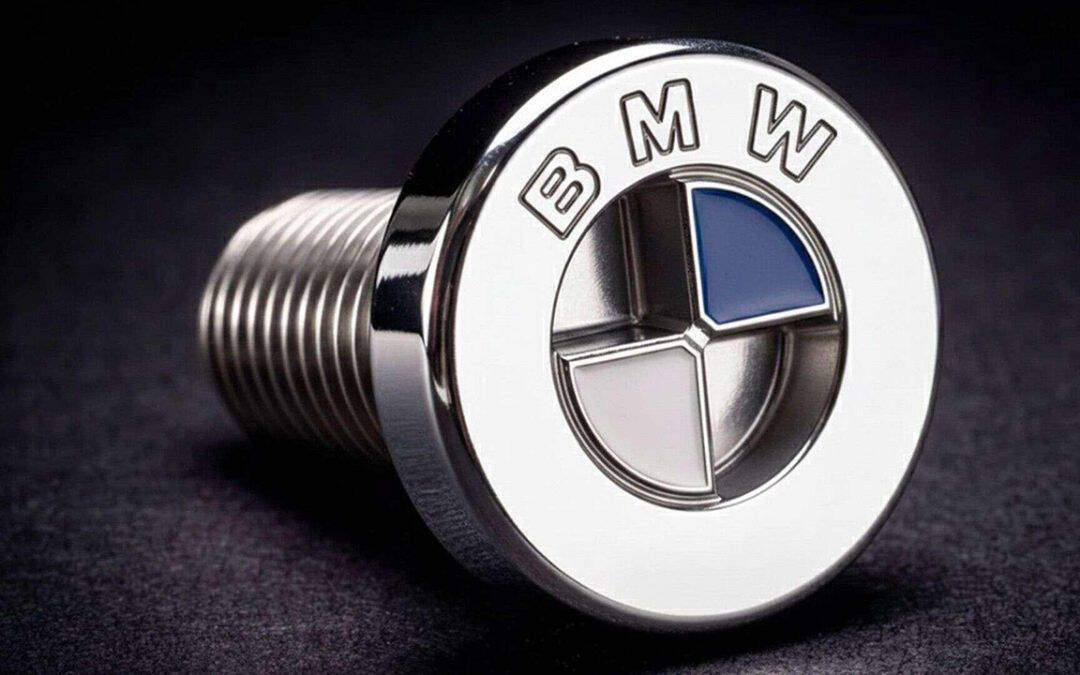
BMW has filed a patent for a new type of fastener.
The drive pattern of the screw is based on BMW’s roundel logo, divided into quadrants and engineered so that a matching proprietary tool can engage it while standard tools cannot.
That small decision carries a surprising amount of meaning.
But first, a story:
I designed a logo for a company called BluCheck. The name refers to the company’s deep expertise in background checks, verification, and trust. The straightforward approach would have been a clean wordmark that conveyed credibility and professionalism.
Instead, the design enabled us to saturate the logomark with meaning. By breaking the word at a precise angle, the “u” in “Blu” and the “C” in “Check” come together to form a checkmark. The symbol lives inside the name, reinforcing the idea every time it’s seen.
That’s the goal of good design. A logo conveys meaning, communicates truth, and reflects what the business actually does while maintaining visual simplicity and clarity. When done right, it looks like it was always supposed to be that way.
When Design Becomes Strategy
BMW extended that idea far beyond the surface with their new screw. But as they say on late-night TV, “Wait, there’s more…”
In the patent filing, BMW explains that traditional screws allow access by “unauthorized persons,” and that restricting tool compatibility limits who can service certain components.
And so, BMW’s new screw communicates on two levels at once.
The Brand-Level Message
At the brand level, the roundel moves from surface to structure. BMW’s identity becomes part of the product’s architecture, present even in places most customers will never see. That reflects a deep commitment to the brand and a belief that identity belongs inside the product itself.
The Relationship-Level Message
At the relationship level, the same design decision shapes who can interact with the product after purchase. A proprietary screw requires a proprietary tool, and access becomes more controlled. Independent mechanics and owners who prefer to work on their own cars may encounter new limits. And so, the new screw defines more of the experience beyond the initial sale.
Read more: Belief builds brands
Where Behavior Becomes Messaging
BMW is not the first company to take this approach, by the way. When Apple introduced pentalobe screws in its devices years ago, it tightened control over access to internal components and drew unfavorable attention from right-to-repair advocates.
But BMW added a new layer: when the screw carries the automaker’s logo, it connects identity directly to behavior.
Leaders spend time refining messaging, aligning language, and shaping how their organizations present themselves. At the same time, customers form opinions based on how products behave, how services are delivered, and how decisions affect their experience.
Read more: What your business really communicates
Every choice communicates something. Design, access, flexibility, pricing, service, all of it contributes to what people believe. Those signals accumulate, whether they were planned as messaging or not.
If the decisions inside your business were treated as a messaging strategy, how would they change? Because while customers may never read your positioning statement, they will always experience your product.
Read more: Why emotional intelligence beats IQ for success
The Question Your Brand Must Answer
If your brand is speaking through every decision you make, the question becomes simple.
Are you saying what you want it to say?
If you’d like your audiences to see their own business through that lens, let’s talk about bringing this conversation to your stage in 2026.