When Did LARPing Become a Lifestyle?
Why luxury brands, social media, and identity signaling have turned aspiration into a form of live action role playing.
Click HERE to watch:
When Did LARPing Become Lifestyle?
Until recently, I only thought of LARPing as something that happened at comic book conventions, Civil War reenactments, and Renaissance festivals.
From Costumes to Identity
The Original Meaning of LARPing
If you’re not familiar with the term, LARPing stands for Live Action Role Playing. Traditionally, it described people who dressed up as medieval knights, elves, wizards, vampires, or other fictional characters to act out stories together. The goal wasn’t simply to wear a costume. It was to step into a different identity for a while and experience the world through that character’s eyes.
But first, a story.
A friend recently told me about the demand for old Lamborghini keys. Not Lamborghini cars. Lamborghini keys.
The New Version of Role Playing
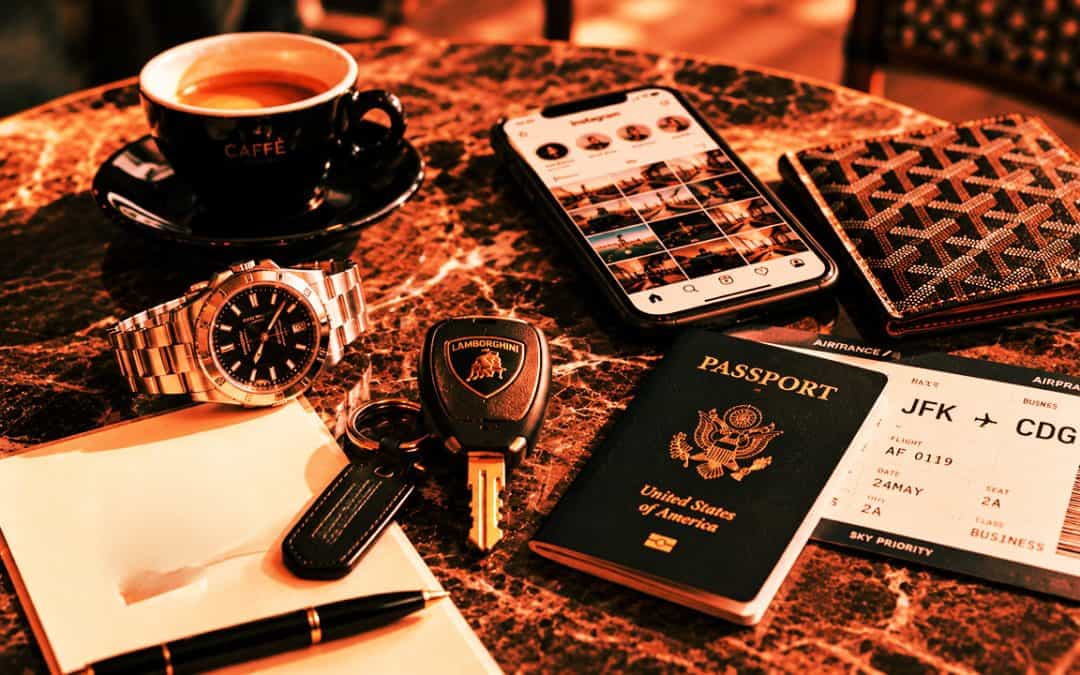
Apparently, there are people who buy old Lamborghini key fobs online and carry them around the same way someone else might carry a lucky coin or their grandfather’s fountain pen. Sometimes the key ends up on a restaurant table next to an espresso, and sometimes it appears in a social media photo. The interesting thing is that the key doesn’t actually do anything because there’s no car involved. The key itself has been separated from its original function and repurposed into something else entirely.
Once I heard that story, I started noticing similar things everywhere.
A young guy at a hotel bar whose vintage watch seemed more carefully positioned than his drink. A woman carrying a beautifully worn Goyard shopping bag that didn’t have anything purchased at a Goyard boutique inside it. Photographs of private air terminals, invitation-only clubs, members’ lounges, tasting menus, and experiences so specific that half their value comes from the fact that most people don’t even know they exist.
What fascinated me most was that in these contexts, many of these objects function less as devices and more as costumes. Not Halloween costumes per se, but costumes in the theatrical sense. They help people step into a coveted role as an entrepreneur, a collector, an investor, an insider, a luxury traveler, or a player. In other words, a person who has somehow gained access to a very special world.
That’s when it dawned on me that LARPing may have transitioned to lifestyle.
The original participants dressed as fictional characters and spent a weekend pretending to inhabit another world. But today, people seem increasingly interested in inhabiting versions of themselves that may or may not fully exist yet (or ever will).
You can blame TikTok and Instagram, but social media didn’t create this phenomenon. Human beings have always experimented with identity. What social media did was create a stage large enough for everyone to perform on at the same time.
Why Luxury Brands Matter
Once you start looking at things through that lens, a lot of luxury marketing begins to look different. No one buys a vintage Patek Philippe simply because they need a way to tell time. The same can be said for a Louis Vuitton trunk, a membership at Casa Cipriani, a reservation at an exclusive restaurant, or access to a club whose greatest asset is that it excludes most applicants.
Objects as Identity Signals
These purchases certainly provide some utility, but their deeper value lies in what they say about the owner and, perhaps more importantly, what they allow the owner to say about themself. Even if it’s not actually true.
Perhaps it’s vanity. Maybe it’s insecurity. Or maybe it’s aspiration.
Buying the Story Before Living It
Most of us are attracted to stories before we fully become the people who belong in them. We buy the guitar before we’re musicians. We join the club before we know everyone in it. We start the company before we feel like entrepreneurs. Sometimes the role comes first and reality catches up later.
That’s probably why so much of this might feel familiar.
Social Media Made the Stage Bigger
What makes the current moment so interesting is that the props have become so visible. Previous generations could quietly try on different identities without an audience. But today the audience is built into the process. Every photograph, every post, every carefully framed image offers a clue about the character being developed.
Which brings us back to LARPing.
Identity With an Audience
The people running through the woods dressed as wizards and elves understand something the rest of us are only beginning to recognize. Human beings have always been attracted to stories, especially stories about themselves.
Performing the Future Self
The costumes may have changed. The castles may have become airport lounges, members’ clubs, and social feeds. And the swords may have given way to handbags, watches, invitation-only experiences, and old Lamborghini keys. But the desire to step into a different role and see how it feels is exactly the same.
Which raises an interesting question for your business…
What This Means for Brands
If people use products, services, memberships, experiences, and even brands to help shape their identities, what role does your company help customers play?
The Role Your Customer Wants to Play
What stories are they telling themselves when they choose you instead of someone else? Or when they chose your competitors instead of you?
Why Some Brands Create More Value
Those questions have a lot to do with why some brands create extraordinary value while others struggle to stand out.
If you’d like to explore what role your brand plays in your customers’ lives and how that role can create more value for your company, let’s have a conversation.
Bruce! Love this post and see LARPing everyday as Miami continues to develop as a luxury lifestyle destination.
I would be very interested in your views on https://therochambeauclub.com/ and how this faux tennis club leverages an imaginary lifestyle brand to sell rosé wine!?!?
Wonderful and revealing article. War is horrible, I have always wondered why groups of men like to dress up and do a re- creation of battle scenes (example the American revolution ) many people feel a loss of identity or imposter syndrome. It must be a need to feel important or valued, this topic could be discussed for hours.
Thank you Carolyn
I wonder how it got the name larping?
It’s an acronym, Charlie.
Live Action Role Playing
At a meeting in New York many years ago, a wealthy banker pointed to the Cartier Tank watch on his wrist and noted that he and I had the same taste in timepieces. Little did he know that mine was a $35 knockoff bought on the street. I nodded agreement and quickly pulled my sleeve down over my wrist. Either he had very bad eyesight or the copy was close to the real thing. I wore that watch for years with the satisfaction that it could pass for the $10,000 original.
What a wonderful story, Rosemary.
What’s so interesting and worth learning from is that the watch wasn’t really telling time. It was telling a story.
Long before people started carrying vintage Lamborghini keys or taking photos in front of private jets they don’t own, people have always looked for ways to try on a future version of themselves.
The banker saw a Cartier Tank. You knew it was a $35 street-corner imitation. Yet for a brief moment, both watches represented the same idea — possibility.
I suspect most successful people have done some version of this at one point or another. They bought the watch, carried the briefcase, joined the club, drove the car, or adopted the habits of the person they hoped to become long before they actually arrived.
Maybe that’s one reason the watch stayed with you for so many years.
It was helping you rehearse a future that I’ve watched you turn into a reality.
I’d never heard of this term before. But I was familiar with the concept. That’s all I understood. So thank you for taking this deeper and making the profound connection of it to luxury brands and social media. The intersections are SO there. Fascinating!
I have to imagine that some of your on-stage antics suggest a personal connection to LARPing, even if you didn’t know the word.